Battery Knowledge
Table of Contents
- 1. Quick Comparison
- 2. What Battery Capacity Means
- 3. Is 100Ah Enough?
- 4. When to Choose 200Ah
- 5. When to Choose 300Ah
- 6. When 400Ah Makes Sense
- 7. One 300Ah vs Three 100Ah Batteries
- 8. Side-by-Side Comparison
- 9. Example Capacity Scenarios
- 10. Capacity Is Not Power Capability
- 11. Consider Charging
- 12. Which Size Should You Choose?
- Frequently Asked Questions
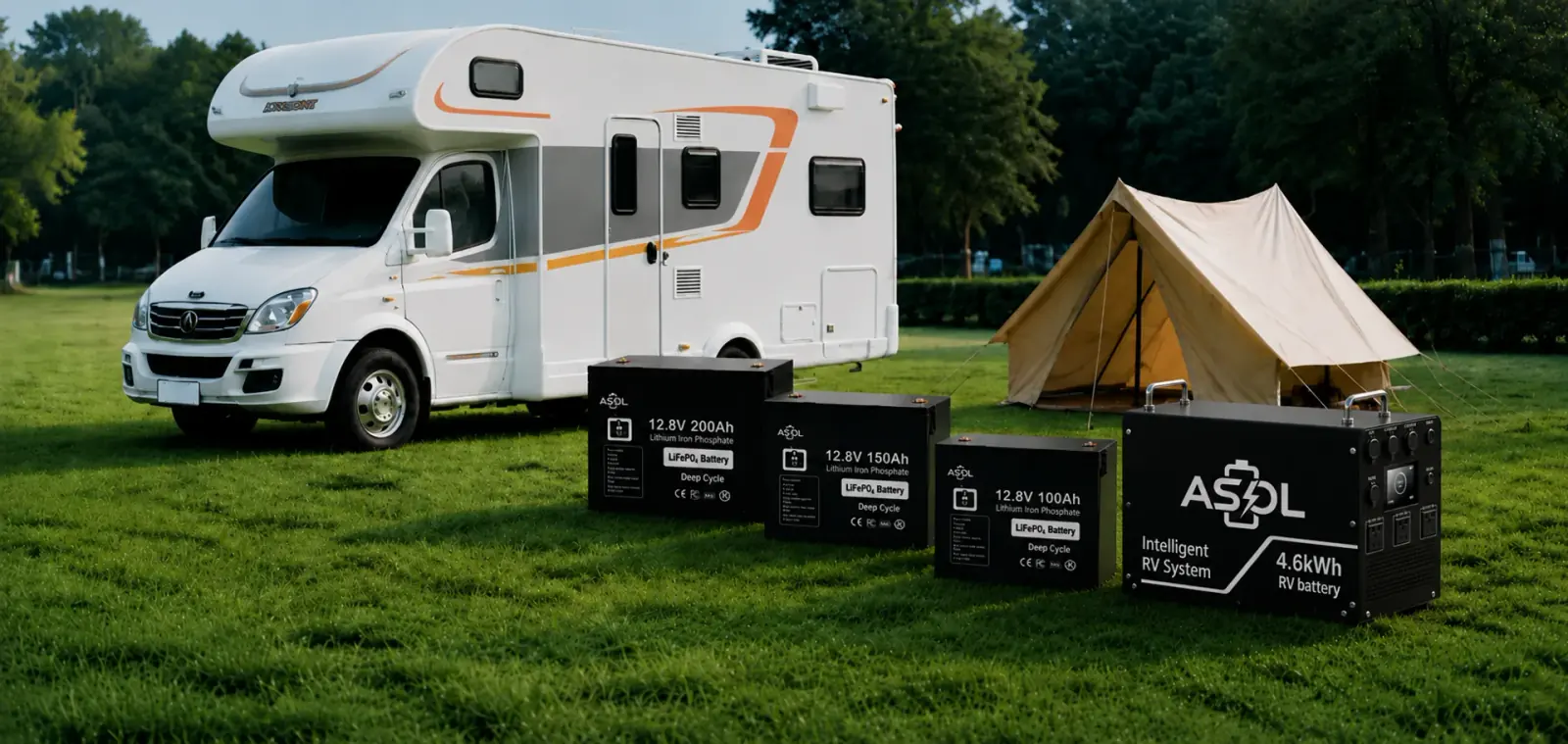
Choosing the right LiFePO4 battery capacity for an RV is not simply a matter of buying the largest battery available.
For most 12V RV, camper van and caravan systems, common battery capacities include 100Ah, 200Ah, 300Ah and 400Ah. Each size provides a different amount of stored energy and may suit a different vehicle, electrical load and off-grid requirement.
The main question is: How much battery capacity does your RV actually need?
This guide compares 100Ah, 200Ah, 300Ah and 400Ah LiFePO4 RV batteries to explain the practical differences between them. For the wider selection process, including voltage and system design, see how to choose an RV lithium battery.
1. 100Ah vs 200Ah vs 300Ah vs 400Ah: Quick Comparison
For a typical 12.8V LiFePO4 battery:
Energy (Wh) = Voltage × Capacity (Ah)
| Battery Capacity | Nominal Energy | General Use Direction |
|---|---|---|
| 100Ah | 1.28kWh | Light RV loads and smaller camper systems |
| 200Ah | 2.56kWh | Moderate daily use and longer off-grid runtime |
| 300Ah | 3.84kWh | Larger camper vans and higher electrical demand |
| 400Ah | 5.12kWh | High-energy RV systems and extended off-grid use |
A 300Ah battery stores approximately three times the nominal energy of a 100Ah battery at the same voltage. However, more capacity does not automatically mean a better RV battery system.
The correct size depends mainly on daily energy use, time between charging, installation space, charging capability, inverter and load requirements, and whether one large battery or multiple batteries are preferred.
2. What Does 100Ah, 200Ah, 300Ah or 400Ah Actually Mean?
Amp-hour capacity tells you how much electrical charge a battery can store. At 12.8V:
- 100Ah = approximately 1,280Wh
- 200Ah = approximately 2,560Wh
- 300Ah = approximately 3,840Wh
- 400Ah = approximately 5,120Wh
Wh or kWh is useful when comparing battery storage with actual RV appliance consumption. If an RV uses around 1,500Wh during a typical day, a 100Ah battery provides less energy reserve than a 200Ah or 300Ah battery. Actual runtime varies with inverter efficiency, operating conditions, battery settings and appliance usage.
3. Is a 100Ah LiFePO4 Battery Enough for an RV?
A 12.8V 100Ah LiFePO4 RV battery provides about 1.28kWh of nominal energy and is generally most suitable for lighter electrical systems.
Typical applications may include small camper vans, travel trailers, caravan auxiliary systems, lighting, water pumps, ventilation fans, refrigerator operation, USB charging and small DC devices.
A 100Ah battery may be suitable if:
- Electrical loads are relatively light
- The vehicle connects to shore power regularly
- Solar or alternator charging is available every day
- Installation space is limited
- The battery mainly supplies auxiliary loads
For RVs using high-power appliances or requiring longer off-grid operation, 100Ah may provide limited runtime.
4. When Should You Choose a 200Ah RV Battery?
A 12.8V 200Ah LiFePO4 RV battery stores approximately 2.56kWh, making it a useful middle option for many RV and camper van systems.
It may support a combination of refrigerator, lighting, fans, water pump, laptop and phone charging, TV, communication equipment and moderate inverter-powered devices. Compared with 100Ah, it provides approximately twice the nominal stored energy.
A 200Ah battery may be suitable if:
- The RV has moderate daily electrical consumption
- You want more reserve than a basic 100Ah system
- The vehicle spends some time away from shore power
- Space is available for a larger battery
- The system does not require an extremely large battery bank
5. When Is a 300Ah LiFePO4 RV Battery a Better Choice?
A 12.8V 300Ah LiFePO4 battery provides approximately 3.84kWh of nominal energy. It may suit larger camper vans and RV conversions where daily electrical demand is significantly higher.
Typical loads may include larger refrigerators, multiple laptops, Starlink or similar communication equipment, coffee makers, microwave ovens, kitchen equipment, entertainment systems and larger inverter-powered appliances.
If approximately 300Ah is required, one 300Ah battery may provide a simpler physical installation than three separate 100Ah batteries.
A 300Ah battery may be suitable if:
- The vehicle has relatively high daily energy consumption
- Off-grid operation is important
- Multiple appliances are used regularly
- The RV has enough installation space
- A larger single-battery configuration is preferred
Battery capacity alone does not determine whether a battery supports a particular inverter. BMS current capability must also be checked.
6. When Does a 400Ah RV Battery Make Sense?
A 12.8V 400Ah LiFePO4 battery stores approximately 5.12kWh of nominal energy. This capacity is generally more suitable for larger RV electrical systems with substantial daily energy demand.
Potential applications include large motorhomes, premium camper van conversions, long-duration off-grid travel, remote working vehicles, larger kitchen appliances, high daily energy consumption and larger solar charging systems.
Compared with 200Ah, a 400Ah battery provides approximately twice the nominal stored energy. Increasing capacity also increases charging requirements, so the RV must have enough charging capacity to restore that energy effectively.
A 400Ah battery may be suitable if:
- The RV regularly operates off-grid
- Daily power consumption is high
- The charging system is appropriately sized
- The vehicle has sufficient battery space
- Longer runtime is more important than minimizing battery size
7. One 300Ah Battery vs Three 100Ah Batteries
If an RV requires approximately 300Ah, two common approaches are one 300Ah battery or three 100Ah batteries connected in parallel. Both can provide similar nominal capacity, but they are not identical from an installation perspective.
One 300Ah Battery
Possible advantages include fewer battery units, fewer external cable connections, simpler mounting, a cleaner compartment layout and fewer terminals. The battery must fit the available compartment, and its BMS must support the required current.
Three 100Ah Batteries
Possible advantages include flexible placement, modular installation and easier physical distribution. Parallel banks require attention to cable length and size, current sharing, fuse protection, terminal connections, battery matching and BMS compatibility. Only batteries approved for parallel operation should be connected this way.
Which is better?
There is no universal answer. RV manufacturers and van builders should consider the compartment layout, required current, wiring design, weight distribution, serviceability and future expansion.
8. Side-by-Side Comparison
| Capacity | Nominal Energy | Typical Energy Demand | Installation | Off-Grid Direction |
|---|---|---|---|---|
| 100Ah | 1.28kWh | Light | Compact | Shorter duration |
| 200Ah | 2.56kWh | Moderate | Medium | Moderate duration |
| 300Ah | 3.84kWh | Medium to high | Larger | Longer duration |
| 400Ah | 5.12kWh | High | Large | Extended duration |
This table is a general guide. Two RVs using the same capacity may have very different runtimes depending on appliances, climate, charging system and operating habits.
9. Example RV Battery Capacity Scenarios
These are planning examples rather than fixed recommendations.
Example 1: Basic Camper
LED lighting, water pump, USB charging, vent fan and a small refrigerator. Possible starting range: 100Ah.
Example 2: Mid-Size Camper Van
Refrigerator, lighting, laptop, phones, water pump, fans, TV and occasional inverter use. Possible starting range: 200Ah.
Example 3: Higher-Load Camper Conversion
Refrigerator, multiple laptops, Starlink, microwave, coffee maker, entertainment equipment and a larger inverter. Possible starting range: 300Ah.
Example 4: Large Off-Grid RV
Multiple high-use appliances, remote-working equipment, larger kitchen loads, a larger inverter, significant solar charging and extended off-grid use. Possible starting range: 400Ah or a larger battery bank.
10. Capacity Is Not the Same as Power Capability
Ah tells you how much energy a battery stores, not how much power it can deliver at one time. Two 300Ah batteries may have the same nominal capacity but different BMS discharge-current ratings.
Before choosing a battery for a larger inverter, confirm continuous discharge current, peak discharge current, BMS rating, inverter power, cable size, fuse protection and terminal capability.
11. Do Not Choose Capacity Without Considering Charging
A larger battery takes longer to recharge if charging power remains the same. Moving from 100Ah to 400Ah significantly increases stored energy, but the charging system must restore that energy within a practical time.
Charging may come from shore power, solar panels, the alternator, a DC-DC charger or a generator. You need a capacity that matches both how much energy you use and how much energy you can put back into the battery.
12. Which RV Battery Capacity Should You Choose?
- 100Ah: generally suited to lighter systems and smaller vehicles.
- 200Ah: a practical choice for moderate daily loads and greater reserve.
- 300Ah: may suit higher-demand camper vans and longer off-grid operation.
- 400Ah: may suit high-energy RV systems and extended autonomy.
The final decision should be based on the complete vehicle design. Confirm daily energy consumption, runtime, inverter power, battery current requirement, charging capacity, compartment dimensions, number of batteries and production quantity.
Frequently Asked Questions
Is a 100Ah LiFePO4 battery enough for an RV?
It can be enough for smaller RVs with light electrical loads and regular charging. Vehicles with higher daily energy use may require 200Ah, 300Ah or more.
Is a 200Ah battery enough for a camper van?
A 200Ah LiFePO4 battery may suit many moderate-load camper van systems, but actual requirements depend on daily energy use and charging availability.
How long will a 300Ah LiFePO4 battery last in an RV?
A 12.8V 300Ah battery stores approximately 3.84kWh of nominal energy. Actual runtime depends on appliance use, inverter efficiency and operating conditions.
Is one 300Ah battery better than three 100Ah batteries?
Not always. One battery may simplify wiring, while three smaller batteries may offer more flexible placement. The correct option depends on installation, current, serviceability and approved parallel configurations.
Is a 400Ah LiFePO4 battery suitable for long-term off-grid RV use?
It may suit larger RVs with high daily energy demand and extended off-grid operation, provided the charging system and installation space can support it.
Can I connect LiFePO4 RV batteries in parallel?
Some batteries support parallel connection, but this depends on battery design and manufacturer specifications. Always confirm the permitted configuration first.
Find the Right LiFePO4 Battery Capacity for Your RV Project
The right capacity is not necessarily the largest one. A well-designed system balances energy demand, runtime, charging, current capability and installation space.
ASOL provides 12.8V LiFePO4 RV battery solutions in 100Ah, 200Ah, 300Ah and 400Ah capacities for RV manufacturers, camper van builders, distributors and OEM projects. Explore our RV lithium battery solutions.
For evaluation, provide the system voltage, target capacity, inverter power, available dimensions, charging method and required quantity.
Plan Your RV Battery Project
Compare available RV battery solutions or share your project requirements with the ASOL team.
Explore RV Lithium Battery Solutions Request an RV Battery Quote