LiFePO4 Battery Solutions by Application
RV & Camper Power
LiFePO4 battery solutions for RVs, camper vans and motorhomes, supporting compatible house-power systems, inverter loads, solar charging and off-grid power requirements.
- Voltage and capacity
- Inverter and charging compatibility
- BMS and installation requirements
Marine & Electric Propulsion
Lithium battery solutions for marine DC power, trolling motors, electric outboards and other compatible marine applications, with battery configuration evaluated according to motor loads and operating conditions.
- Motor voltage and discharge requirements
- Continuous and peak current
- BMS, enclosure and terminal configuration
Deep-Cycle & Lead-Acid Replacement
LiFePO4 battery solutions for compatible lead-acid, AGM and GEL replacement projects, including mobile equipment, commercial applications and other deep-cycle power systems.
- Voltage and charging compatibility
- Capacity and discharge requirements
- Dimensions and terminal configuration
Electric Mobility & Utility Vehicles
Custom lithium battery pack solutions for electric motorcycles, scooters, tricycles, golf carts, low-speed electric vehicles, utility vehicles and other compatible mobility platforms.
- Motor and controller requirements
- Continuous and peak discharge current
- BMS, charger and mechanical integration
Compatibility note: Vehicle traction battery suitability must be evaluated for each project. Standard deep-cycle batteries shown on this page are not automatically suitable for vehicle traction systems. Lead-acid replacement and marine projects also require confirmation of charging, load and environmental conditions.
Available LiFePO4 Battery Models
Review the existing ASOL LiFePO4 battery models below by system voltage. Final suitability depends on the application, electrical system, charging method and installation requirements.
12V Standalone RV Batteries
LiFePO4 battery options for 12V camper van, motorhome and RV electrical systems.
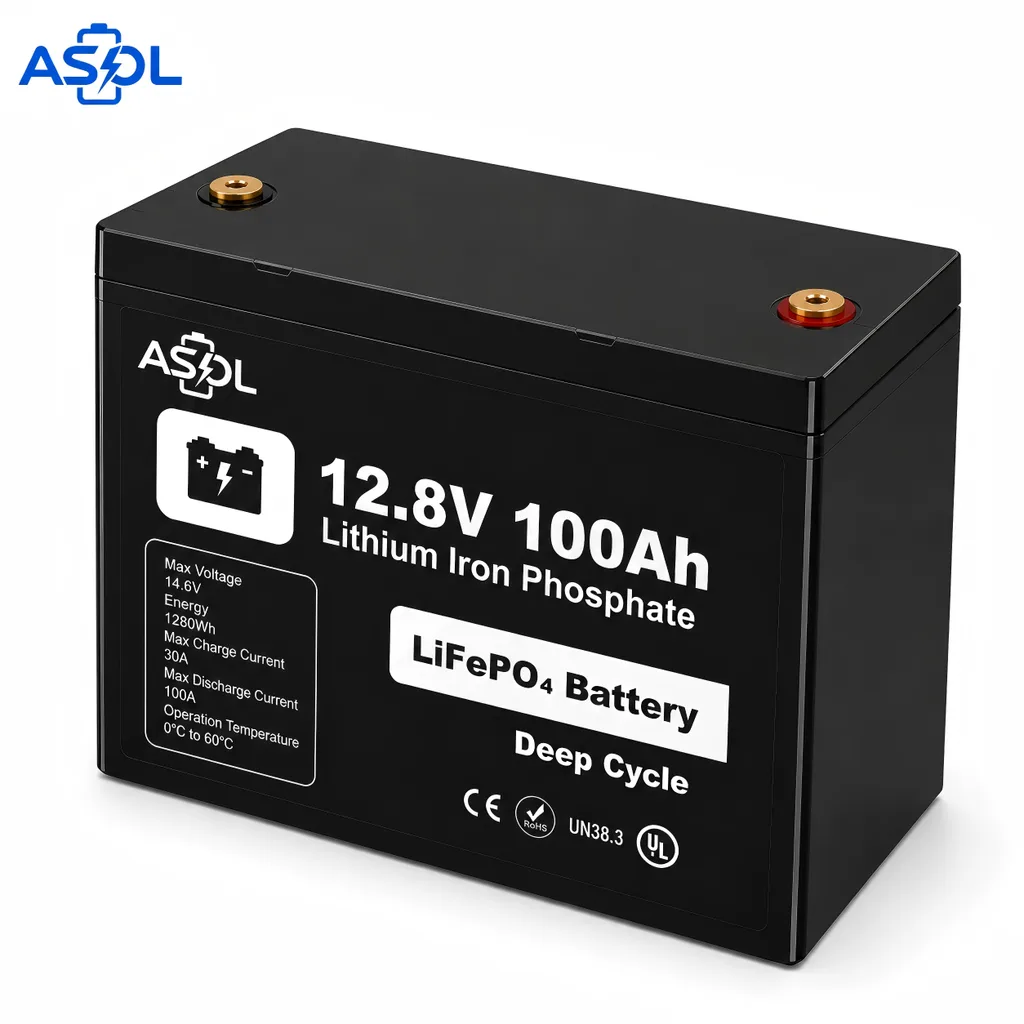
Compact LiFePO4 option for RV auxiliary and lower-capacity house-power applications.
- 12.8V
- 100Ah
- 1.28kWh
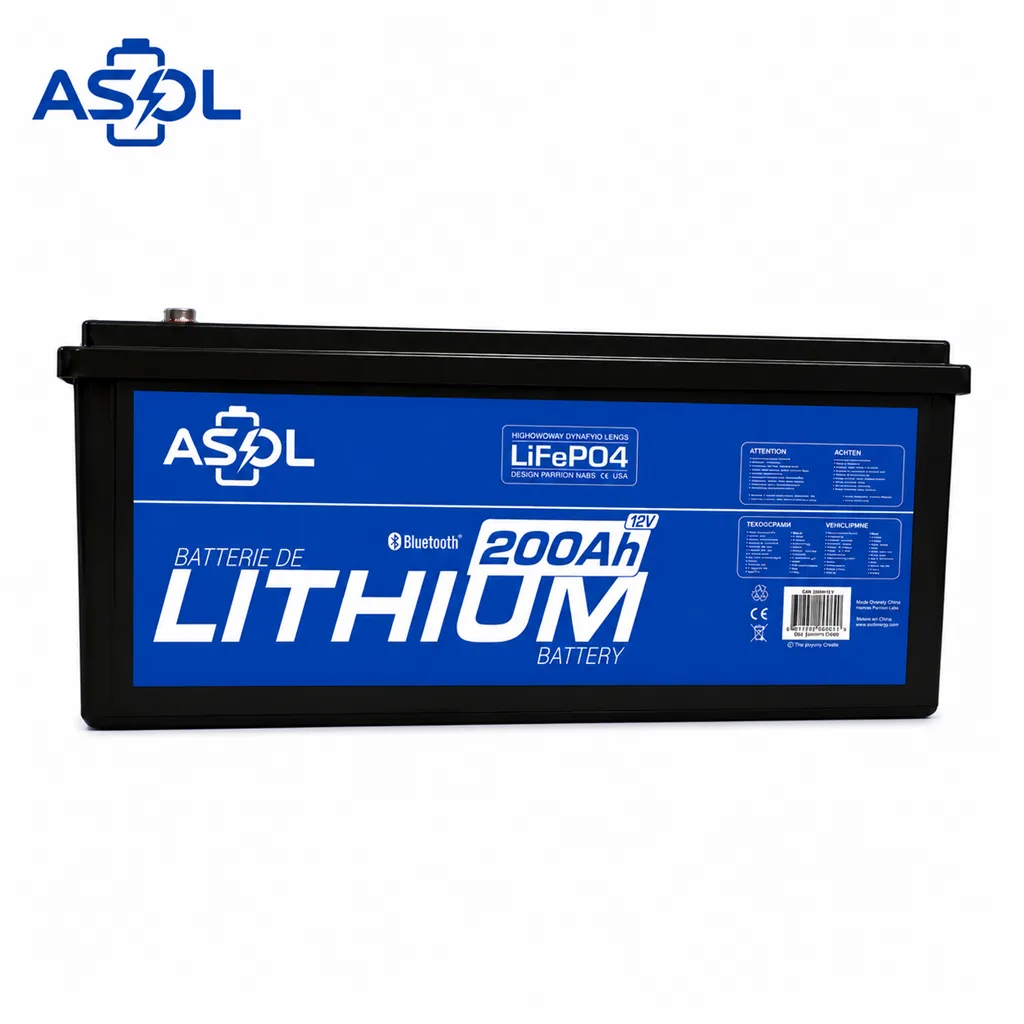
Balanced capacity option for camper vans and medium-capacity RV electrical systems.
- 12.8V
- 200Ah
- 2.56kWh
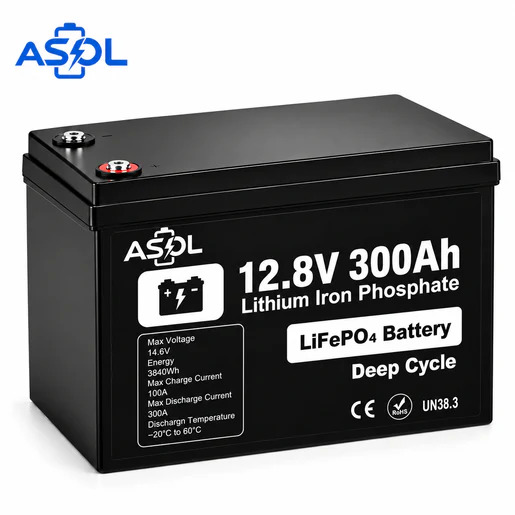
High-capacity option for RV and camper systems requiring greater stored energy and high-current capability.
- 3.84kWh
- 300A continuous
- 400A peak / 10s
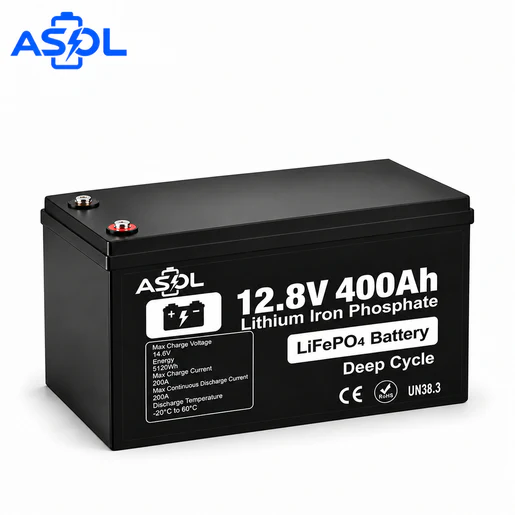
Large-capacity option for RV and off-grid applications requiring extended stored energy.
- 12.8V
- 400Ah
- 5.12kWh
24V Standalone RV Batteries
LiFePO4 battery options for 24V camper, caravan and motorhome electrical platforms.
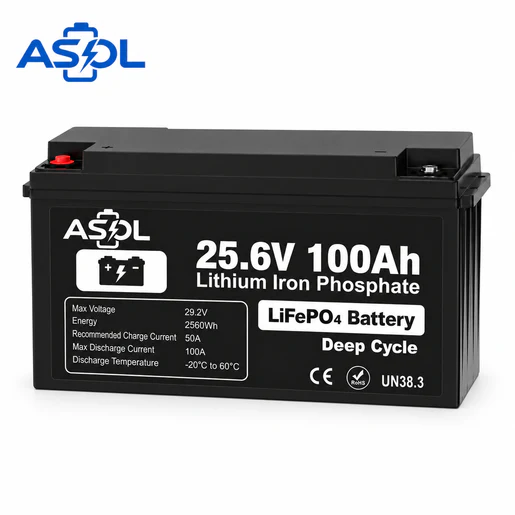
Standalone LiFePO4 battery for 24V RV, camper and caravan electrical systems.
- 25.6V
- 100Ah
- 2.56kWh
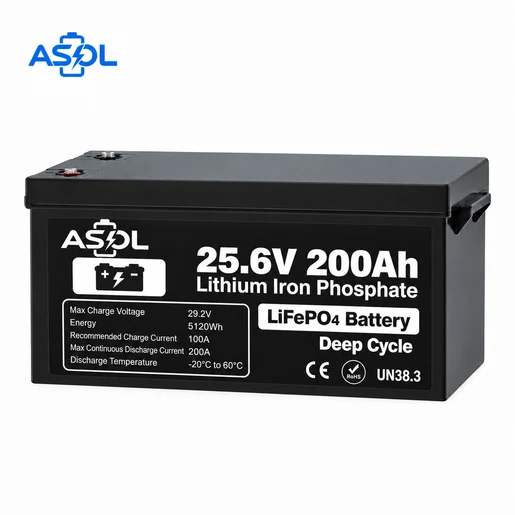
Higher-energy standalone battery option for 24V RV and motorhome power systems.
- 25.6V
- 200Ah
- 5.12kWh
36V & 48V Deep-Cycle Batteries
LiFePO4 battery options for compatible higher-voltage deep-cycle and lead-acid replacement systems.
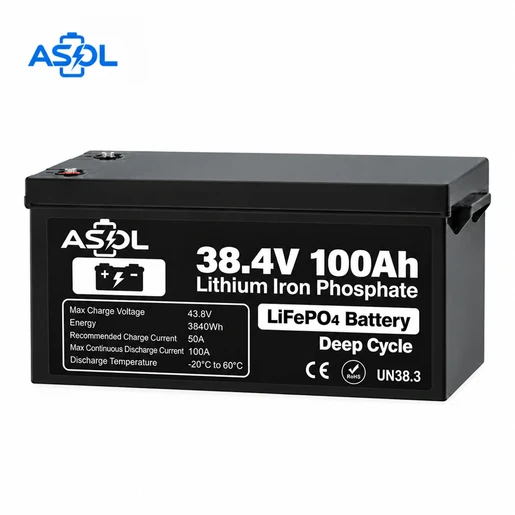
Deep-cycle LiFePO4 option for compatible 36V-class power and lead-acid replacement systems.
- 38.4V
- 100Ah
- 3.84kWh
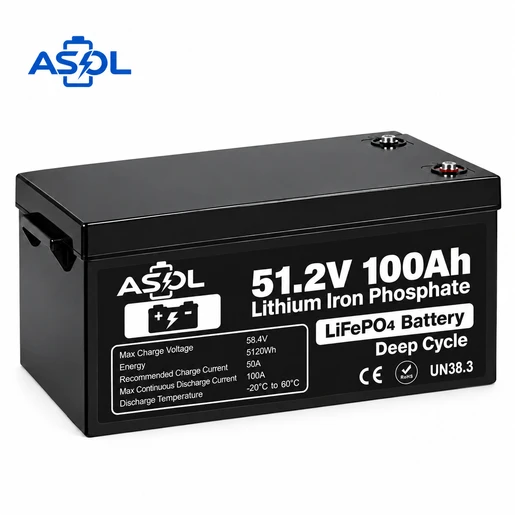
Deep-cycle LiFePO4 option for compatible 48V-class lead-acid replacement and project-based power systems.
- 51.2V
- 100Ah
- 5.12kWh
Integrated RV Power System
For RV projects that require a more integrated power architecture rather than a standalone battery configuration.
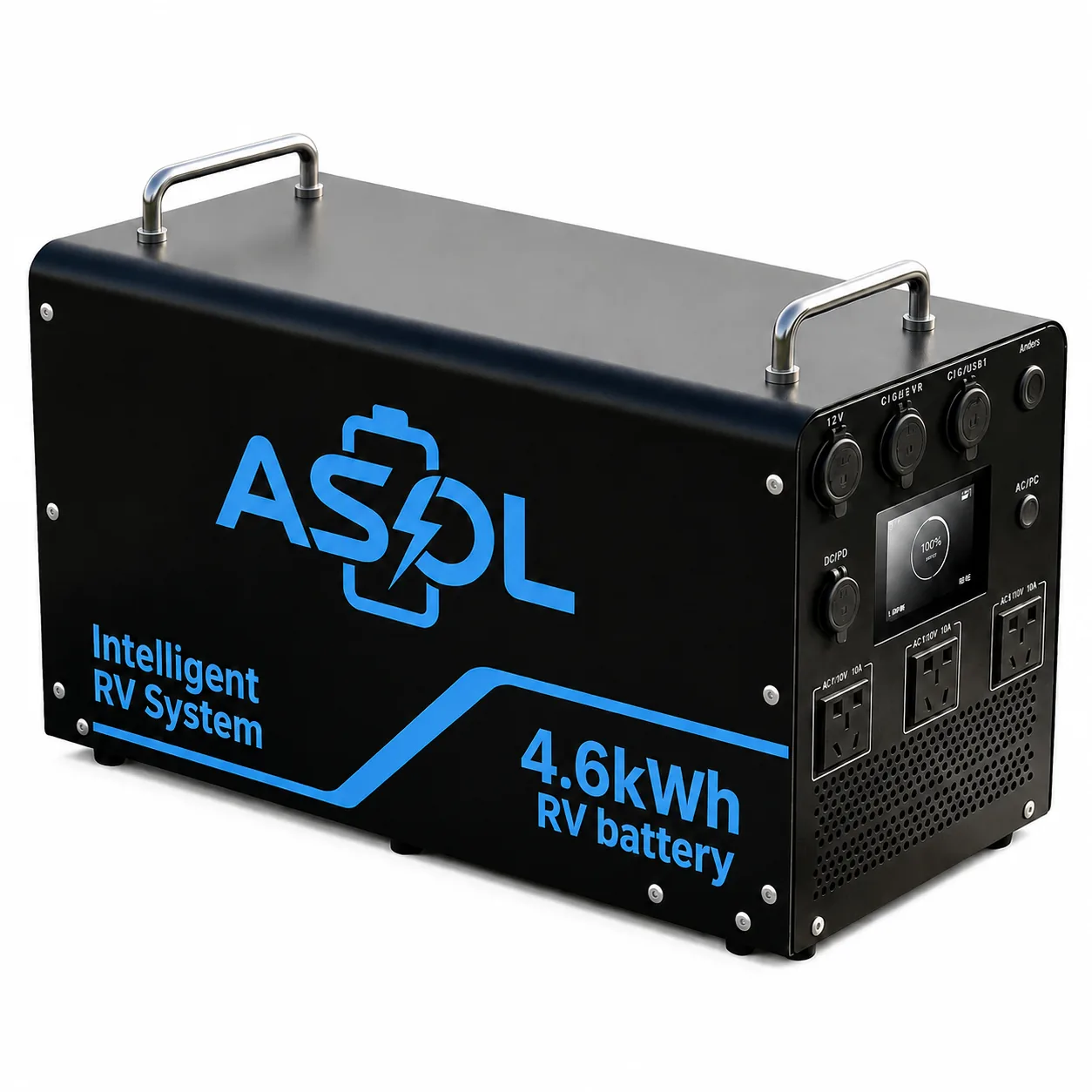
Need help comparing a standard battery model with a project-specific configuration?
Discuss Your Battery ProjectCustom Electric Mobility Battery Solutions
ASOL supports custom lithium battery pack projects for electric motorcycles, scooters, tricycles, golf carts, low-speed electric vehicles and utility equipment. Battery configurations can be evaluated according to motor and controller requirements, system voltage, capacity, discharge current, charging compatibility and installation conditions.
Battery Selection & System Compatibility
Battery requirements differ by application. An RV house battery is not equivalent to a vehicle traction battery; marine projects require motor-load and environmental review; and lead-acid replacement requires charging and electrical compatibility checks. Series or parallel operation depends on the specific battery model and BMS, while electric-vehicle projects require confirmed motor, controller and peak-current data.
| Requirement | Information to Confirm |
|---|---|
| System Voltage | Required operating voltage |
| Capacity & Energy | Capacity, energy and runtime |
| Continuous Load | Normal operating current |
| Peak Load | Motor startup or inverter surge |
| Charging Compatibility | Charger, inverter, DC-DC and solar controller |
| BMS Requirements | Protection, monitoring and communication |
| Mechanical Integration | Dimensions, terminals and mounting |
| Operating Environment | Temperature, vibration and enclosure |
| Project Details | Application, quantity and destination |
Final battery configuration is confirmed from the project requirements, not from voltage or capacity alone.
OEM/ODM Battery Engineering
ASOL supports project-specific lithium battery configurations based on electrical, mechanical and application requirements. Customization options are reviewed according to technical feasibility, component selection and production requirements.
Voltage & Capacity
Cell Configuration
BMS & Discharge Requirements
Communication & Monitoring
Enclosure & Mechanical Design
Connectors, Terminals & OEM Branding
Optional functions and ratings are confirmed for the approved configuration; they are not universal across all models.
Manufacturing, Quality & Supply
Standard & Custom Supply
ASOL supplies standard LiFePO4 battery models and evaluates customized battery pack requirements for OEM/ODM projects.
Battery selection is reviewed against the application, system voltage, continuous and peak load, charging method, installation conditions, BMS requirements and mechanical integration needs.
Manufacturing & Quality
- Material and component inspection
- Battery pack assembly
- BMS integration
- Electrical verification
- Final inspection
Technical Documentation
Technical, transport and compliance documentation is reviewed according to the battery model, configuration and destination requirements.
Frequently Asked Questions
What LiFePO4 batteries does ASOL supply?
ASOL supplies standard LiFePO4 batteries in multiple voltage and capacity ranges, plus project-specific battery packs evaluated for electrical, mechanical and application requirements.
Can ASOL provide batteries for RV, marine and deep-cycle applications?
Yes. ASOL supplies LiFePO4 solutions for compatible RV, camper, marine, deep-cycle and lead-acid replacement projects. Battery selection is confirmed against the system voltage, load, charging method and installation conditions.
Does ASOL offer custom electric mobility battery packs?
Yes. ASOL evaluates custom battery pack projects for electric motorcycles, scooters, tricycles, golf carts, low-speed electric vehicles and utility equipment based on the motor, controller, current, charger and mechanical requirements.
Can ASOL customize voltage, capacity, BMS and enclosure?
These items can be reviewed for OEM/ODM projects. Final options depend on technical feasibility, component selection, application requirements and the approved battery configuration.
How is a LiFePO4 battery matched to an application?
Battery selection depends on the application voltage, capacity or runtime target, continuous and peak load, charging system, installation space and operating conditions. Custom requirements are reviewed according to technical feasibility and the approved project configuration.
What information is needed for a battery quotation?
Please provide the application, system voltage, capacity or runtime target, continuous and peak load, charger details, installation dimensions, terminals or connectors, quantity and delivery destination.
What certifications and transport documents are available?
Technical, transport and compliance documentation is reviewed for the selected battery model, configuration and destination. Availability must be confirmed for the exact product being ordered.
Discuss Your Battery Project
Send your application, voltage, capacity, load, charging, installation, quantity and destination requirements. ASOL will review whether an existing battery model or a project-specific configuration is more appropriate.