What the Equipment Actually Needs
Peak current can matter as much as battery capacity in robotics and cleaning equipment.
- Motor startup and peak current
- Normal operating current and duty cycle
- Target runtime
- Charging dock behavior or charging method
- Available battery compartment
- Operating environment
Battery Options by Equipment Type
Robot Vacuum / Compact Cleaning Equipment
Compact installation, repeated charging cycles and dock charging. Cylindrical or LiPo options depend on the internal structure.
Floor Cleaning / Utility Equipment
Higher loads make runtime, vibration, mechanical integration and serviceability important.
AGV / AMR
Duty cycle, peak current and charging method come first; communication is included where the system requires and supports it.
Battery Integration & Customization
Configuration can cover cell arrangement, BMS, NTC, connector, harness, enclosure, mounting, label and packaging. CAN or RS485 is considered only where required and technically supported by the equipment and BMS.
Development Process
1. Device & Load Review
2. Battery Configuration
3. Sample / Specification Validation
4. Production Planning
Recommended Battery Solutions
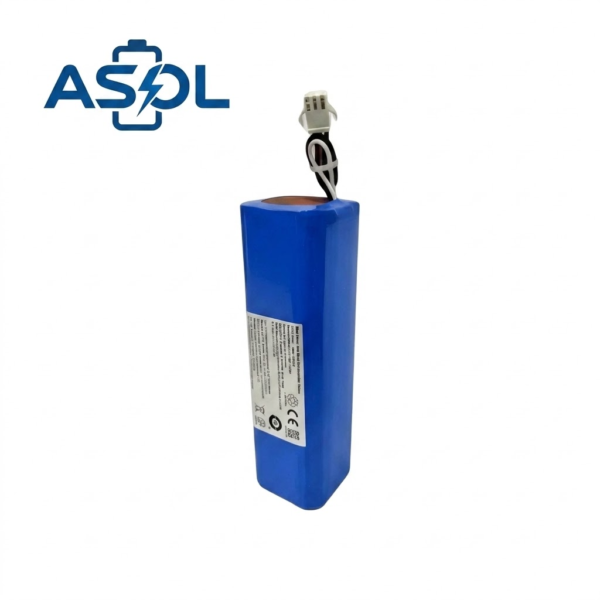
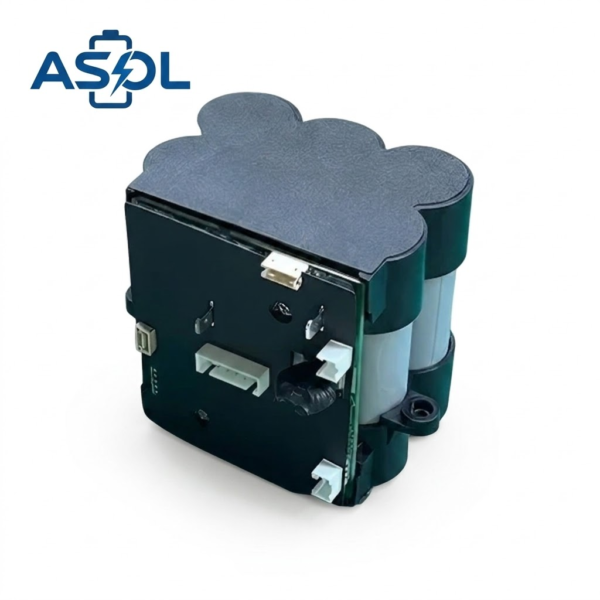
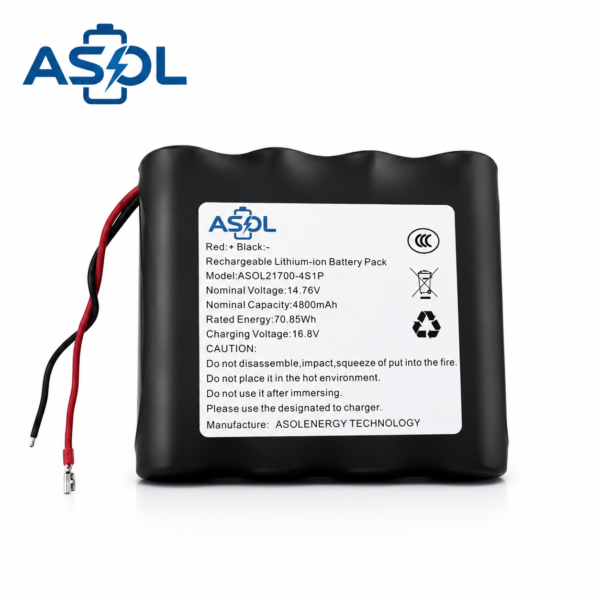
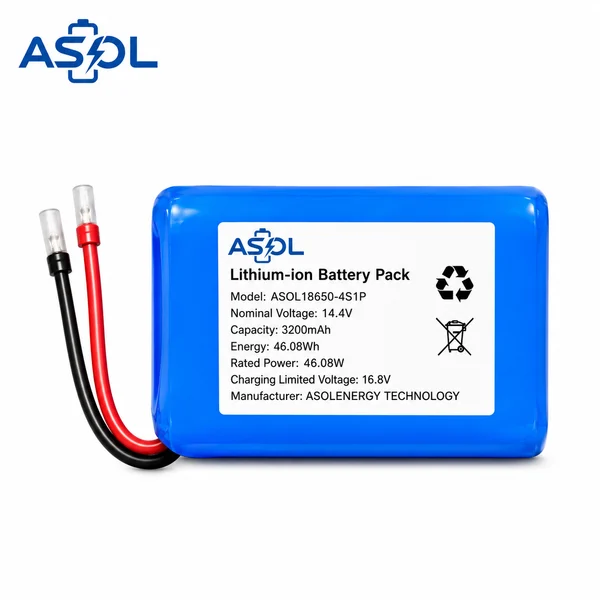
Matched battery packs for robot vacuums, floor-cleaning equipment and utility devices with repeatable operating cycles.
What to Send Us
- Equipment type
- Voltage and normal / peak current
- Target runtime and charging method
- Available dimensions and connector
- Communication requirements, if any
- Operating environment
- Quantity and destination
For a replacement project, include the existing battery label, battery drawing or connector photo when available.
FAQ
How do you select a battery for a robot or floor-cleaning machine?
Start with motor startup current, normal load, duty cycle, runtime, charging behavior, battery space and operating environment. Peak current can matter as much as capacity.
Can ASOL support CAN or RS485 battery communication?
CAN or RS485 can be reviewed when the equipment and selected BMS technically support the required communication protocol.
Can connectors, harnesses and mounting be customized?
Yes. Connector, harness, enclosure and mounting details can be matched to an approved drawing or replacement sample.
What information is needed for a quotation?
Send the equipment type, voltage, normal and peak current, runtime, charging method, battery dimensions, connector, communication needs, environment, quantity and destination. For replacement projects, include the battery label, drawing or connector photo if available.
Discuss Your Robotics Battery Project
Send the equipment load, battery space, charging method and the information already available.
Request a Quote