Table of Contents
- What Do 100kW and 215kWh Mean?
- 1. Define the Application
- 2. Confirm the Required Power
- 3. Determine the Required Energy Capacity
- 4. Confirm the PCS or Inverter Requirements
- 5. Confirm the Battery System Voltage
- 6. Choose the Appropriate Cooling Method
- 7. Confirm BMS, EMS and Communication Requirements
- 8. Evaluate the Installation Environment
- 9. Provide Grid and Electrical Information
- 10. Confirm Certification and Project Requirements
- What Information Should You Provide for a 100kW/215kWh BESS Quote?
- Is a 100kW/215kWh BESS Suitable for Every Project?
- Commercial & Industrial Energy Storage Solutions from ASOL
- Frequently Asked Questions
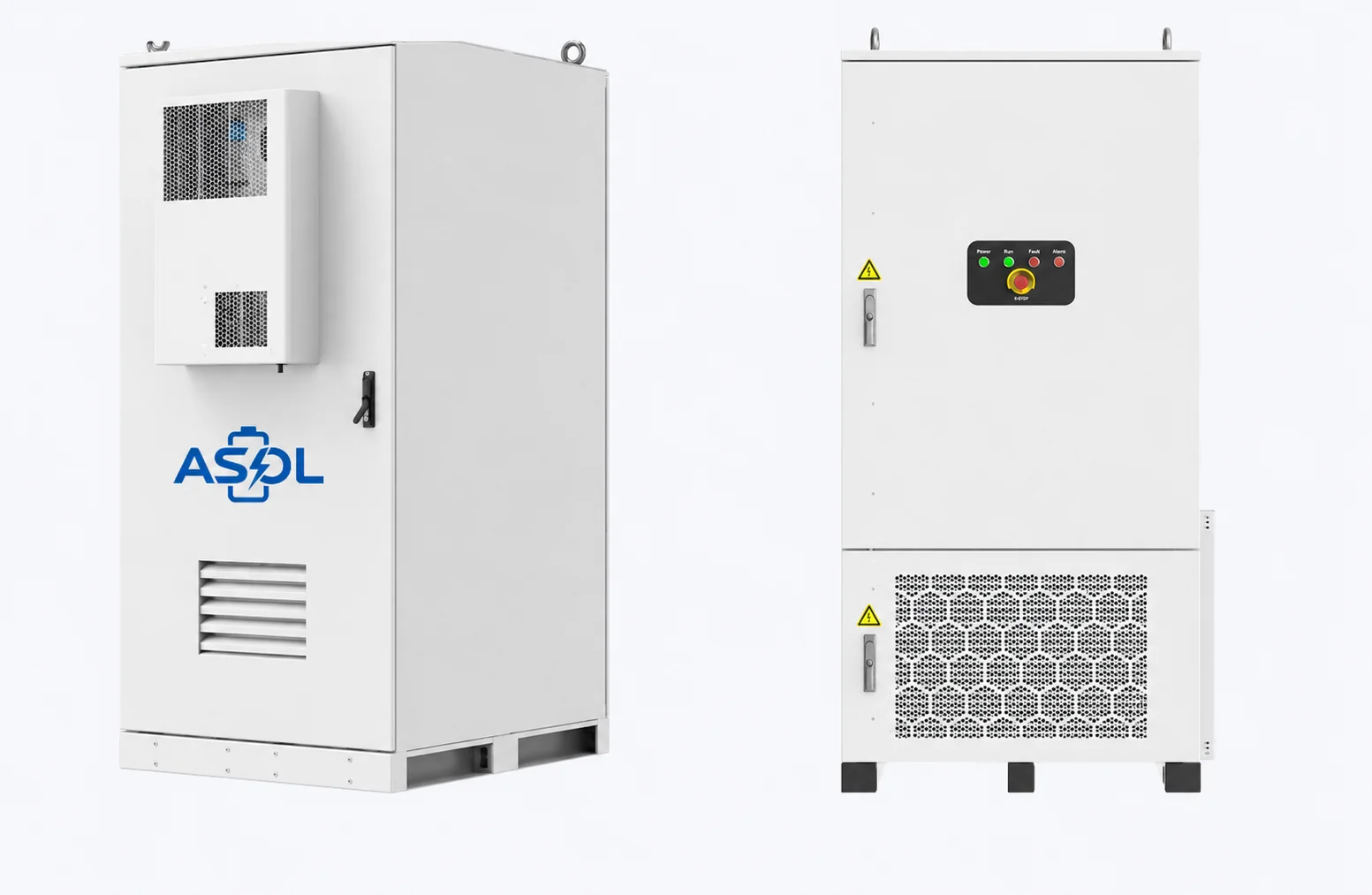
A 100kW/215kWh battery energy storage system (BESS) can be used in a range of commercial and industrial energy storage projects, including peak shaving, solar energy storage, load shifting and backup power.
However, power and battery capacity alone are not enough to determine whether a specific BESS configuration is suitable for a project.
Before requesting a quotation, buyers should confirm the actual application, load profile, required operating time, PCS or inverter configuration, grid conditions, communication requirements and installation environment.
Providing this information early helps the battery supplier evaluate the system configuration more accurately and reduces unnecessary changes later in the project.
What Do 100kW and 215kWh Mean?
A BESS is generally evaluated using two key ratings: power and energy capacity.
100kW refers to the system's power rating. It indicates how much power the system can deliver or absorb at a given time.
215kWh refers to the nominal energy capacity of the battery system.
These two values serve different purposes.
A project with high instantaneous power demand may require a higher power rating, while a project that needs longer operating or backup time may require more battery capacity.
For this reason, buyers should evaluate both the load power and the required operating duration rather than selecting a system based only on its kWh rating.
1. Define the Application
The first step is to clarify how the battery energy storage system will be used.
Typical commercial and industrial applications include:
- Peak shaving
- Load shifting
- Solar PV energy storage
- Backup power
- Demand management
- Microgrid applications
- Commercial facility energy management
- Industrial power support
Different applications may require different operating strategies and system configurations.
For example, a solar-plus-storage project may store excess PV generation for later use, while a peak-shaving project may discharge during periods of high electricity demand.
The intended application should therefore be confirmed before the battery and PCS configuration is finalized.
2. Confirm the Required Power
Although the reference configuration is rated at 100kW, the actual project load should still be evaluated carefully.
Important information includes:
- Continuous power demand
- Peak power demand
- Duration of peak loads
- Type of electrical loads
- Whether motors or other inductive loads are involved
- On-grid, off-grid or hybrid operation
If the application regularly requires more than 100kW, a different PCS or system configuration may be required.
For applications with lower power demand but longer operating time, increasing battery capacity may be more important than increasing the system power rating.
3. Determine the Required Energy Capacity
Battery capacity should be selected according to the required operating time and actual load profile.
For preliminary evaluation:
Required energy ≈ Load power × Required operating time
For example, a 50kW load operating for two hours would theoretically require approximately 100kWh of energy.
However, this is only a preliminary calculation.
The final battery capacity should also consider factors such as:
- Depth of discharge
- System efficiency
- PCS conversion losses
- Battery operating limits
- Reserve capacity
- Actual load variation
Therefore, providing an actual load profile or expected backup duration allows for a more accurate system evaluation.
4. Confirm the PCS or Inverter Requirements
The power conversion system (PCS) is a key part of a commercial battery energy storage system.
It manages power conversion between the battery DC side and the AC electrical system.
Before quotation, buyers should confirm:
- Required PCS power
- AC voltage
- Grid frequency
- On-grid or off-grid operation
- Existing inverter or PCS model, if applicable
- Battery-side DC voltage range
- Communication requirements
If the project already has an inverter or PCS, providing the model number and technical datasheet can help confirm battery compatibility.
The battery voltage range must match the PCS DC operating range.
5. Confirm the Battery System Voltage
Commercial and industrial BESS projects often use high-voltage battery architectures.
The selected battery voltage can affect:
- Current level
- Cable sizing
- PCS compatibility
- Battery module configuration
- BMS architecture
- Overall system design
For higher-power systems, increasing the battery voltage can reduce current for the same power level.
However, battery voltage should not be selected independently. It should be evaluated together with the PCS and overall system architecture.
For projects requiring high-voltage battery configurations, buyers can also review our High-Voltage LiFePO4 Energy Storage Systems.
6. Choose the Appropriate Cooling Method
Thermal management is an important part of BESS design.
Commercial and industrial battery systems may use either air cooling or liquid cooling depending on the system configuration and project conditions.
Important factors include:
- Ambient temperature
- Installation location
- Charge and discharge frequency
- Operating power
- System capacity
- Site conditions
- Maintenance requirements
Air-cooled systems use airflow to manage battery temperature, while liquid-cooled systems use a liquid thermal management circuit for more controlled heat transfer.
The appropriate solution should be selected according to the project rather than based on system capacity alone.
For a more detailed comparison, see our Air-Cooled vs. Liquid-Cooled Battery Energy Storage Systems guide.
7. Confirm BMS, EMS and Communication Requirements
A commercial BESS normally includes several layers of system monitoring and control.
The Battery Management System (BMS) monitors battery operating conditions and provides protection and control functions.
Depending on the project, an Energy Management System (EMS) may also be used to coordinate operating schedules, load management and communication with other equipment.
Communication requirements may include:
- CAN
- RS485
- Modbus
- PCS communication
- EMS integration
- Remote monitoring
If the BESS needs to communicate with an existing PCS, inverter or third-party management platform, the communication protocol should be confirmed during the engineering evaluation stage.
8. Evaluate the Installation Environment
Installation conditions can affect cabinet design, thermal management and system configuration.
Before quotation, buyers should confirm:
- Indoor or outdoor installation
- Ambient temperature range
- Available installation space
- Altitude
- Humidity
- Ventilation conditions
- Site layout
- Environmental requirements
For outdoor projects, enclosure and environmental protection requirements should also be evaluated according to the installation site.
Providing site drawings or available installation dimensions can help the supplier evaluate the system more accurately.
9. Provide Grid and Electrical Information
For grid-connected commercial and industrial energy storage projects, electrical information should be confirmed at an early stage.
Useful information includes:
- Project country
- Grid voltage
- Grid frequency
- Three-phase electrical configuration
- Existing transformer information
- Solar PV capacity, if applicable
- Grid connection point
- Required operating mode
Grid requirements can vary between projects and markets, so the electrical architecture should be reviewed before finalizing the BESS configuration.
10. Confirm Certification and Project Requirements
Certification and documentation requirements may differ depending on the destination market, project type and transportation method.
Buyers should confirm:
- Destination country
- Required certifications
- Transportation documentation
- Local electrical requirements
- Customer-specific testing requirements
- Project acceptance requirements
These requirements should ideally be discussed during the early evaluation stage because they may influence system design, testing and project cost.
What Information Should You Provide for a 100kW/215kWh BESS Quote?
To evaluate a commercial or industrial energy storage project efficiently, buyers should provide the following information whenever possible:
- Application
- Required power
- Required energy capacity
- Required operating or backup time
- Load profile
- Grid voltage and frequency
- PCS or inverter information
- Existing solar PV system information
- Communication requirements
- Indoor or outdoor installation
- Available installation space
- Ambient temperature
- Quantity
- Destination country
The more complete the project information, the easier it is to evaluate the battery configuration, system voltage, PCS compatibility, BMS communication and overall system architecture.
Is a 100kW/215kWh BESS Suitable for Every Project?
Not necessarily.
A 100kW/215kWh system can serve as a reference configuration for many commercial and industrial applications, but the final system should still be selected according to the actual project requirements.
Some projects may require:
- Higher power
- Greater battery capacity
- Longer backup duration
- A different battery voltage range
- Multiple battery cabinets
- A different PCS configuration
- Different thermal management
For this reason, commercial and industrial BESS projects should be evaluated individually rather than selected solely according to a standard power and capacity rating.
Commercial & Industrial Energy Storage Solutions from ASOL
ASOL provides project-based LiFePO4 battery solutions for commercial and industrial energy storage applications.
Battery system configuration can be evaluated according to project requirements including:
- Energy capacity
- System voltage
- BMS communication
- PCS compatibility
- Thermal management
- Installation conditions
Explore our Industrial Energy Storage Systems for available configurations and project-based battery solutions.
For project evaluation, please provide your required power, battery capacity, application, inverter or PCS information, installation environment, quantity and destination country.
Projects requiring a higher-voltage, higher-capacity reference can also review the 832V 261kWh High-Voltage ESS, while the final system configuration should still be evaluated according to the actual project requirements.
Discuss Your BESS Project
Planning a commercial or industrial energy storage project?
Share your required power, energy capacity, application, PCS or inverter information, installation environment, and project location with our team for initial evaluation.
Frequently Asked Questions
What is the difference between 100kW and 215kWh in a BESS?
100kW represents the system power rating, while 215kWh represents the nominal battery energy capacity. Power indicates how much electricity the system can deliver at a given time, while energy capacity affects how long the battery can support the load.
Can a 215kWh BESS be used with a solar PV system?
Yes. A battery energy storage system can be integrated with solar PV, but the final configuration depends on the PV capacity, inverter architecture, grid connection and required operating strategy.
What information is needed before requesting a BESS quotation?
Key information includes the application, required power, required battery capacity, load profile, grid voltage, PCS or inverter information, communication requirements, installation environment, quantity and destination country.