Battery Knowledge
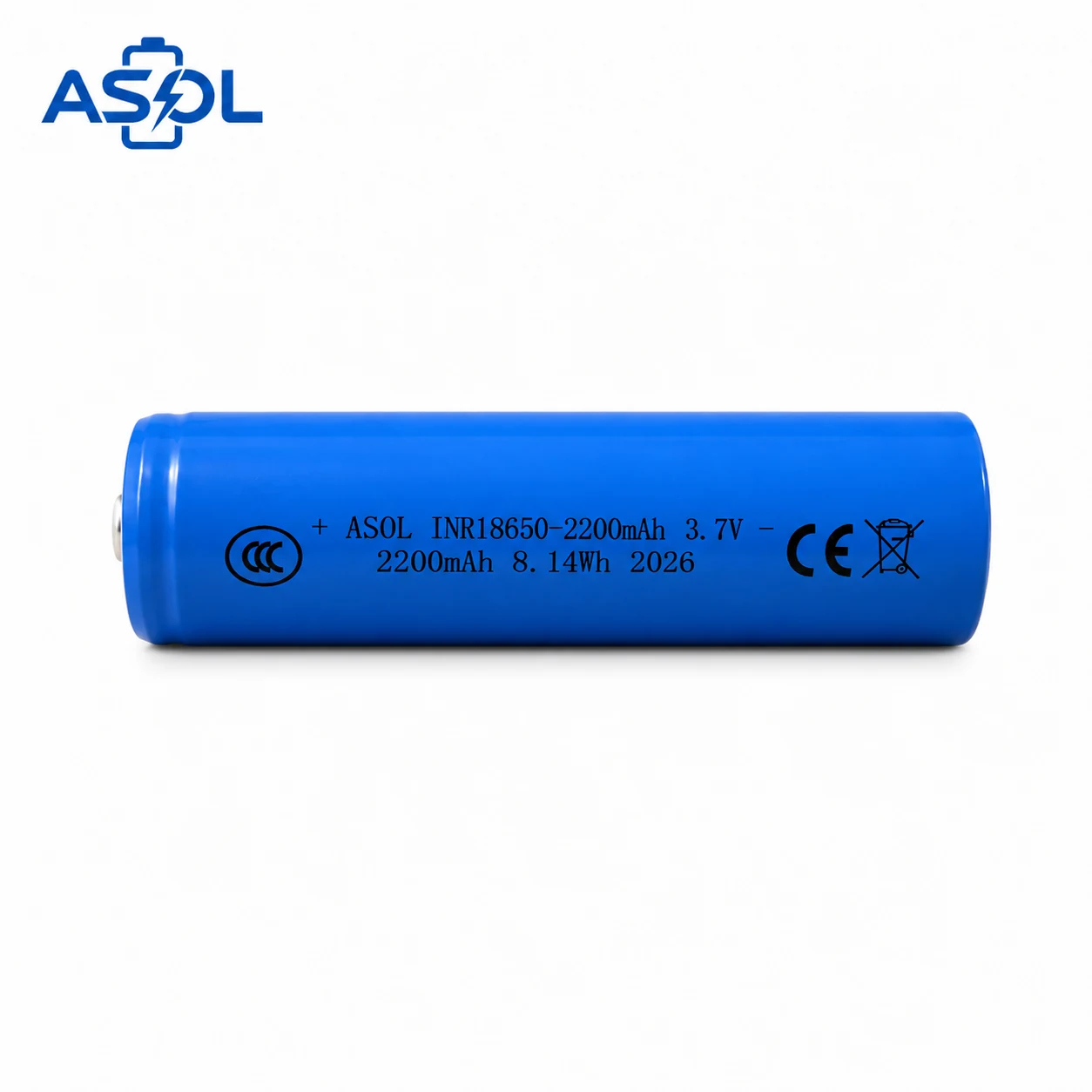 18650 lithium-ion cell
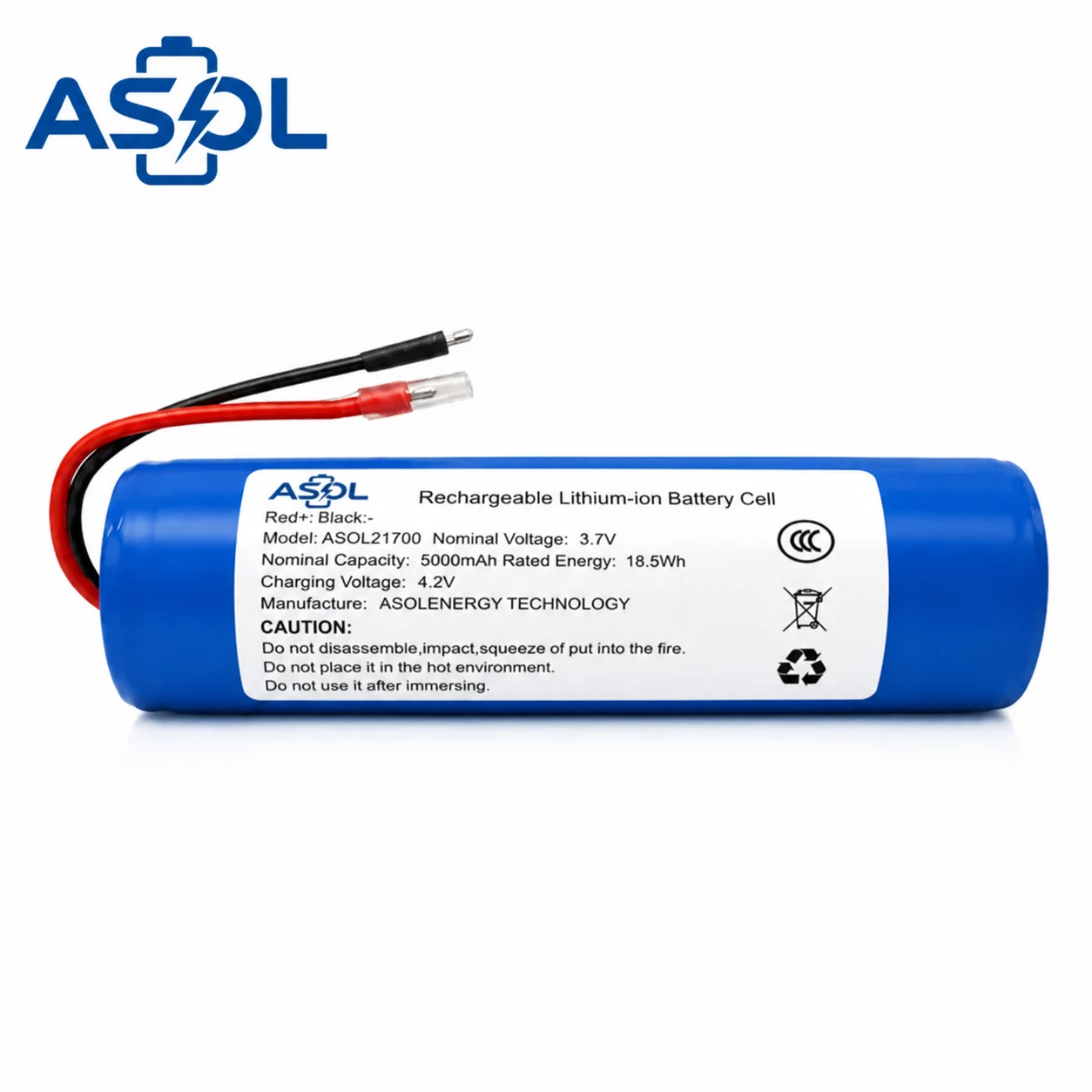 21700 lithium-ion cell
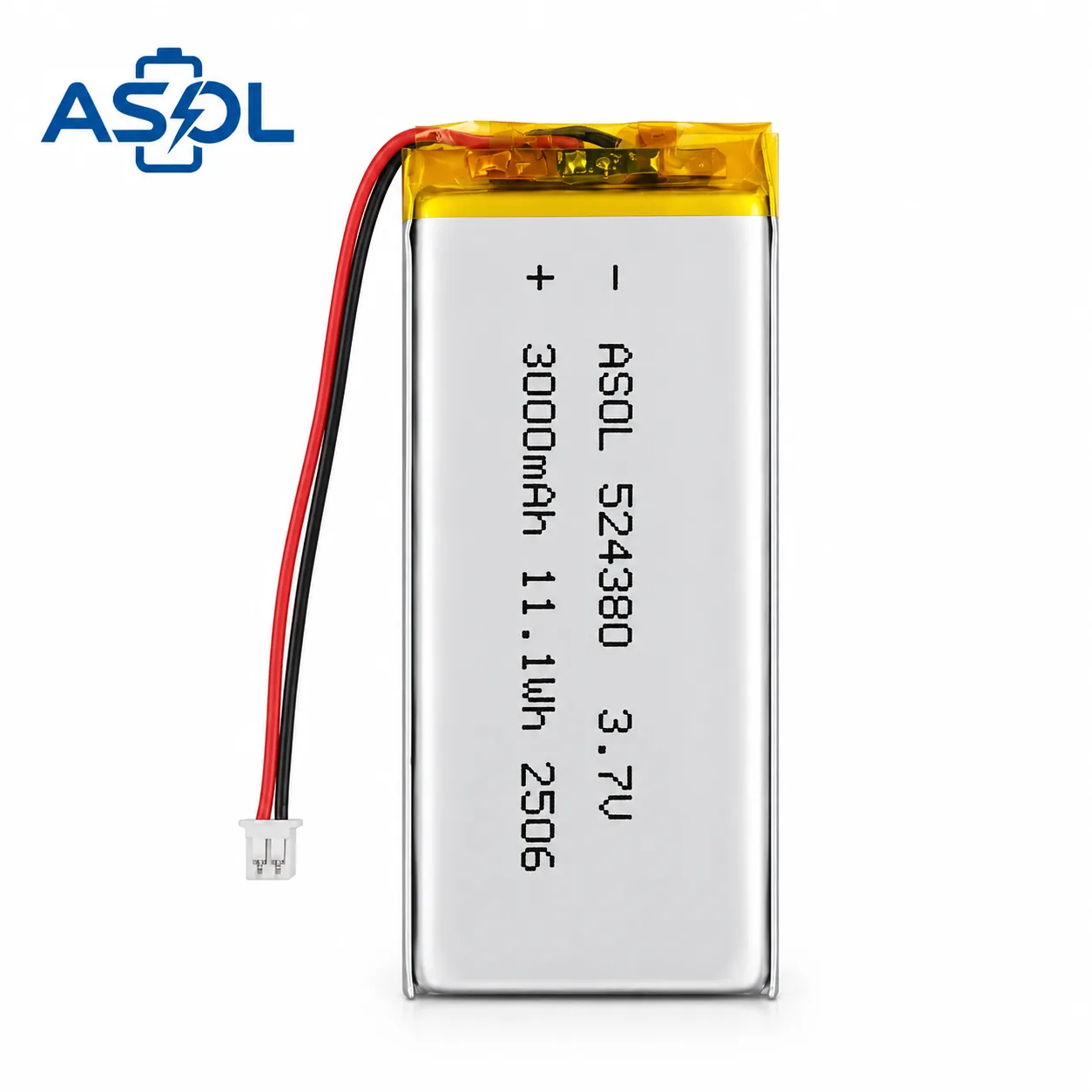 Lithium polymer pouch cell
Choosing a cell format affects battery dimensions, capacity, current capability, mechanical design, thermal management, protection requirements and assembly method.
For many OEM battery projects, the initial comparison is between 18650 lithium-ion cells, 21700 lithium-ion cells and lithium polymer pouch cells. No single format is universally better. The appropriate option depends on the equipment’s electrical, mechanical and operating requirements.
ASOL supplies 18650 and 21700 lithium-ion cells, cylindrical battery packs, lithium polymer pouch cells and custom lithium polymer battery assemblies for suitable OEM/ODM projects.
ASOL does not supply loose or individual LiFePO4 cells.
Table of Contents
- 1. Understanding Cell Format and Chemistry
- 2. Quick Comparison
- 3. 18650 Lithium-Ion Cells
- 4. 21700 Lithium-Ion Cells
- 5. Lithium Polymer Pouch Cells
- 6. Electrical and Mechanical Selection Factors
- 7. Pack Design and Protection Requirements
- 8. How to Choose for an OEM Project
- 9. Frequently Asked Questions
- 10. Discuss Your Battery Project
1. Understanding Cell Format and Chemistry
18650 and 21700 describe cylindrical cell dimensions rather than a single battery chemistry. An 18650 cell is approximately 18 mm in diameter and 65 mm in length, while a 21700 cell is approximately 21 mm in diameter and 70 mm in length. Actual dimensions and specifications must be confirmed from the selected cell datasheet.
Lithium polymer pouch cells use a flexible laminated pouch enclosure instead of a rigid cylindrical metal can. They are generally available in rectangular profiles with model-specific thickness, width, length and capacity.
Cell format and chemistry are related but different selection factors. The final choice must be based on the complete cell specification rather than the format name alone.
LiFePO4 is a battery chemistry, not a cell-size format. ASOL does not supply loose LiFePO4 cells, so this guide focuses on the lithium-ion and lithium polymer cell formats ASOL supplies.
2. Quick Comparison
| Factor | 18650 Lithium-Ion | 21700 Lithium-Ion | Lithium Polymer Pouch |
|---|---|---|---|
| Physical format | Cylindrical metal-can cell | Larger cylindrical metal-can cell | Rectangular flexible pouch cell |
| Typical nominal voltage | Usually 3.6V or 3.7V, depending on model | Usually 3.6V or 3.7V, depending on model | Usually 3.7V for a single cell, depending on model |
| Dimensions | Standardized cylindrical format; verify selected model | Standardized cylindrical format; verify selected model | Model-specific thickness, width and length |
| Capacity | Depends on the selected cell model | Depends on the selected cell model; often higher per cell than comparable 18650 options | Depends on pouch dimensions and selected model |
| Pack structure | Usually requires cell holders, interconnection and enclosure design | Usually requires cell holders, interconnection and enclosure design | Requires suitable mechanical support, protection and allowance for pouch-cell behavior |
| Current capability | Cell-model dependent | Cell-model dependent | Cell-model and configuration dependent |
| Space utilization | Suitable where cylindrical cell layout is acceptable | Suitable where the larger cylindrical format can be accommodated | May suit thin or rectangular installation spaces when a matching cell is available |
| Protection | PCM or BMS depends on configuration | PCM or BMS depends on configuration | PCM or BMS depends on single-cell or multi-cell configuration |
| Best evaluated by | Voltage, capacity, current, space and cell availability | Voltage, capacity, current, space and cell availability | Voltage, capacity, maximum dimensions, current and available pouch-cell model |
3. 18650 Lithium-Ion Cells
The 18650 is a widely used cylindrical lithium-ion format. Its standardized shape can simplify holder, welding and enclosure design when the equipment has sufficient space for a cylindrical-cell arrangement. See ASOL’s cylindrical lithium cell supply options and the 18650 and 21700 cell selection guide for related information.
An 18650 solution may be considered when:
- The device is designed around an 18650 cell or pack
- A compact cylindrical-cell layout is suitable
- The required voltage and capacity can be achieved with an appropriate series and parallel configuration
- A suitable cell model is available for the required continuous and peak current
- The mechanical design can support cell holders, interconnections and protection components
The format alone does not determine capacity, discharge current, cycle life or safety performance. These must be verified from the selected cell specification.
4. 21700 Lithium-Ion Cells
The 21700 is larger than the 18650 format and may offer greater capacity per cell, depending on the selected model. Using a higher-capacity cell may reduce the number of cells required for a target pack capacity, but the complete pack dimensions, current requirements and thermal design must still be evaluated.
A 21700 solution may be considered when:
- The equipment can accommodate the larger cell diameter and length
- Higher capacity per cell is useful for the pack layout
- The selected model supports the required continuous and peak current
- The project is being designed around a new battery configuration
- Cell availability, consistency and documentation meet the project requirements
A 21700 cell is not a direct physical replacement for an 18650 cell. The holder, enclosure, interconnection and pack configuration must be designed for the selected format. ASOL can evaluate cylindrical battery pack projects around either format.
5. Lithium Polymer Pouch Cells
Lithium polymer pouch cells use a laminated pouch enclosure and are commonly considered for equipment with thin or rectangular battery compartments. Available thickness, width, length, capacity and current capability depend on the selected cell model. Learn more about ASOL as a lithium polymer battery manufacturer, the lithium polymer battery range and the lithium polymer battery selection guide.
A lithium polymer pouch-cell solution may be considered when:
- The installation space is thin or rectangular
- A matching pouch-cell model is available
- The project requires a protected single-cell assembly with PCM, NTC, wires or connector
- A multi-cell battery pack is required for a higher operating voltage
- The mechanical design can provide suitable support and protection
A pouch enclosure is flexible, but this does not mean a cell can be produced in any requested shape or size. Available cells and project-specific configurations must be evaluated for technical feasibility.
6. Electrical and Mechanical Selection Factors
The appropriate cell format must be selected by reviewing the battery as part of the complete device. Please confirm the following items:
- Required nominal voltage
- Required capacity or operating runtime
- Continuous and peak discharge current
- Charging voltage and charging method
- Maximum battery dimensions and tolerances
- Available installation shape
- Weight target
- Operating and charging temperature
- PCM or BMS requirements
- NTC or temperature-sensing requirements
- Wire length, wire gauge and connector
- Expected production quantity
- Required certifications or destination-market documentation
For lithium polymer projects, the permitted dimensions should include space for the PCM, wires, connector, insulation and applicable pouch-cell expansion allowance.
7. Pack Design and Protection Requirements
Cell format affects the mechanical structure, interconnection method, protection solution and assembly process of the battery pack. For a broader project review, see ASOL’s custom lithium battery pack manufacturing information.
For cylindrical battery packs
- Confirm the series and parallel configuration
- Select a cell model suitable for the required current
- Evaluate cell holders and mechanical support
- Confirm welding and interconnection requirements
- Match the PCM or BMS to the battery configuration
- Confirm fuse, wiring, connector and enclosure requirements
For lithium polymer battery assemblies
- Confirm the selected pouch-cell dimensions and tolerances
- Confirm whether a bare cell, protected assembly or multi-cell pack is required
- Evaluate PCM, BMS, NTC, wires and connector requirements
- Provide suitable mechanical support and insulation
- Confirm charging and device-integration requirements
Series and parallel configuration, protection functions and communication options must be confirmed for the selected cells and project. They should not be assumed from the cell format alone. Use the BMS selection guide when defining protection requirements.
8. How to Choose for an OEM Project
Consider 18650 when:
- The equipment already uses or can accommodate the 18650 format
- A multi-cell cylindrical layout is suitable
- An available cell model meets the required capacity and current
Consider 21700 when:
- The equipment can accommodate the larger cylindrical format
- Higher capacity per cell may improve the pack layout
- The pack is being designed specifically for the 21700 format
Consider lithium polymer pouch cells when:
- The battery compartment is thin or rectangular
- A suitable pouch-cell model matches the dimensional requirements
- PCM, NTC, wires or a specific connector are required
- The equipment design provides suitable support and protection
The final decision should be based on the selected cell datasheet, complete electrical requirements, mechanical design, protection solution, order quantity and project feasibility. ASOL’s supported finished LiFePO4 batteries are a separate product scope from loose cells.
9. Frequently Asked Questions
What is the main difference between 18650 and 21700 cells?
Both are cylindrical lithium-ion formats, but the 21700 format is physically larger. Capacity, current capability, cycle performance and other specifications depend on the selected cell model.
Is a 21700 cell always better than an 18650 cell?
No. A 21700 cell may provide greater capacity per cell, but it also requires more installation space. The appropriate format depends on the battery compartment, voltage, capacity, current, thermal design and available cell model.
Can a 21700 cell replace an 18650 cell?
Not as a direct physical replacement. The two formats have different dimensions, so the holder, enclosure, interconnection and pack design must be evaluated again.
Can ASOL manufacture a lithium polymer cell in any size or shape?
No size or shape should be assumed to be available without evaluation. ASOL can review the required thickness, width, length and capacity and recommend an available pouch cell or assess a suitable battery configuration.
Does ASOL supply loose LiFePO4 cells?
No. ASOL does not supply loose or individual LiFePO4 cells. ASOL provides finished LiFePO4 batteries and battery systems for supported applications.
Does ASOL provide both cells and assembled battery packs?
ASOL supplies 18650 and 21700 lithium-ion cells, cylindrical battery packs, lithium polymer pouch cells and custom lithium polymer battery assemblies for suitable projects.
Are samples available?
Samples may be evaluated for cylindrical lithium-ion and lithium polymer projects according to the selected cell, specifications, quantity and project feasibility. Sample specifications, cost and lead time are confirmed separately, and sample freight is paid by the customer.
What certifications are available?
Available certifications, transport test reports and compliance documents depend on the selected cell or battery configuration and destination market. Applicable requirements must be confirmed before ordering.
What information should I send for cell selection?
Please provide the application, voltage, capacity or runtime, continuous and peak current, charging method, maximum dimensions, PCM or BMS requirements, wire and connector details, quantity and destination.
10. Discuss Your Battery Project
Share your application, required voltage, capacity or runtime, continuous and peak current, maximum dimensions, PCM or BMS requirements, wires, connector, quantity and destination with ASOL for project evaluation.
Email: info@asolbattery.com
WhatsApp: +86 157 7985 8703