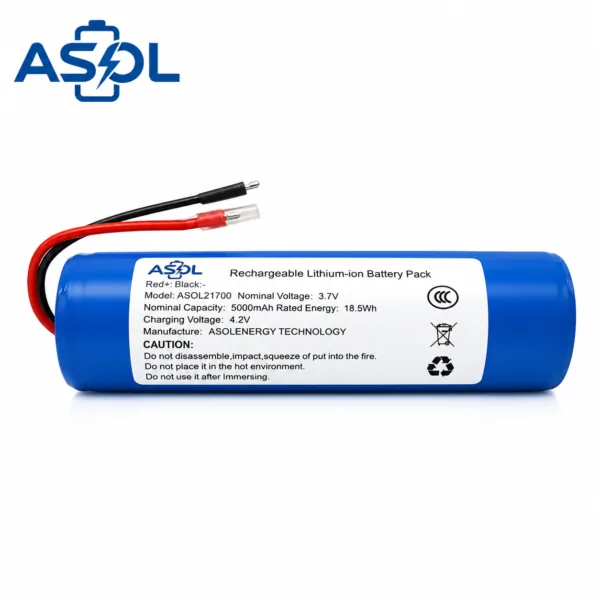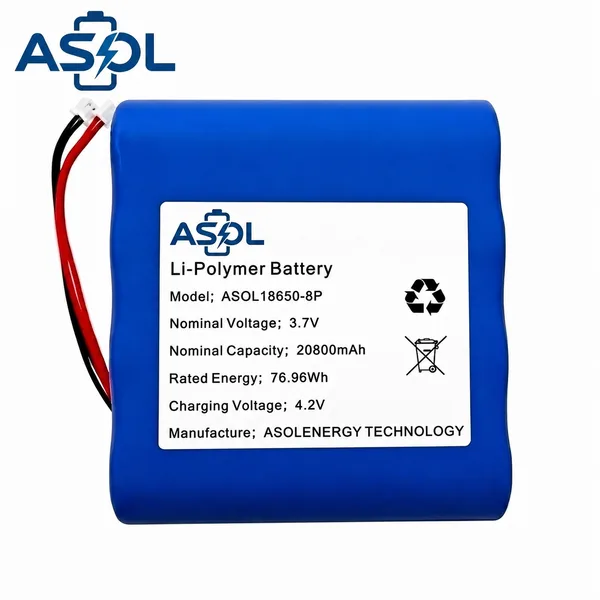

Here is a detailed explanation of lithium-ion batteries in English, covering their advantages, materials, and structural design, based on the information provided and general knowledge in the field.
Lithium-Ion Batteries: Advantages, Materials, and Structural Design
Lithium-ion batteries have become the dominant power source for modern portable electronics and electric vehicles due to their outstanding performance. Below is a detailed breakdown of their key advantages, the critical materials they are made of, and cutting-edge structural designs aimed at pushing their capabilities further.
🔋 Core Advantages of Lithium-Ion Batteries
The widespread adoption of lithium-ion batteries is attributed to a combination of features that outperform many other rechargeable battery technologies.
- High Energy Density: This is their most significant advantage. They can store a large amount of energy in a relatively small and lightweight package. For electric vehicles, this translates directly to longer driving ranges on a single charge. For portable devices like smartphones and laptops, it means more usage time without increasing bulk.
- Long Cycle Life and High Efficiency: High-quality lithium-ion batteries can endure hundreds to thousands of charge-discharge cycles with minimal performance degradation. They also boast high coulombic efficiency (most of the energy used for charging is stored and can be retrieved) and a low self-discharge rate (typically only about 2-5% per month), meaning they lose very little power when not in use.
- No Memory Effect: Unlike older nickel-cadmium (NiCd) batteries, lithium-ion batteries do not suffer from the “memory effect.” You can recharge them at any time without needing to fully discharge them first, offering great convenience in daily use.
- Fast-Charging Capability: Modern lithium-ion technology supports rapid charging. With appropriate charging protocols and battery management systems, they can accept a high current to replenish a significant portion of their capacity in a short time, which is crucial for the practicality of electric vehicles.
- Relatively Low Maintenance: They do not require the periodic discharge that other battery types need to prolong their life, and they have no requirement for priming after storage.
- Environmental Friendliness: Compared to alternatives like lead-acid or nickel-cadmium batteries, they contain fewer toxic heavy metals (like lead, cadmium, or mercury), making them a more environmentally sound choice, provided they are recycled properly at the end of their life.
- Technological Maturity: Decades of research and development have led to a highly mature and reliable technology. Manufacturing processes, global supply chains, and recycling infrastructure are well-established, and costs have dropped dramatically (from over $1,000 per kWh to under $130 per kWh), making them economically viable for a wide range of applications.
🧪 Key Materials That Determine Performance
The performance of a lithium-ion battery is dictated by the materials used in its four main components. Think of them as a team where each member has a critical role.
| Component | Main Role | Common Materials | Material Impact on Performance |
|---|---|---|---|
| Cathode (Positive Electrode) | Determines the cell’s voltage and capacity, providing lithium ions. | Layered Oxides (e.g., Lithium Cobalt Oxide – LiCoO₂), Spinel (e.g., Lithium Manganese Oxide – LiMn₂O₄), Olivine (e.g., Lithium Iron Phosphate – LiFePO₄), NMC/NCA (Nickel Manganese Cobalt / Nickel Cobalt Aluminum oxides). | The choice of cathode material is the primary factor defining the battery’s energy density, power capability, cost, and safety. For example, LiFePO₄ is known for its excellent safety and long life, while NMC offers higher energy density. |
| Anode (Negative Electrode) | Stores and releases lithium ions during charging and discharging. | Graphite (most common), Lithium Titanate (Li₄Ti₅O₁₂), and next-generation materials like Silicon-based and Lithium metal. | Graphite is the standard due to its stability and low cost, but its capacity is limited. Silicon alloys are a major research focus because they can theoretically store over 10 times more lithium ions than graphite. |
| Electrolyte | The medium that allows lithium ions to move between the cathode and anode (acts like “blood”). | A lithium salt (e.g., LiPF₆ – Lithium Hexafluorophosphate) dissolved in an organic solvent (e.g., EC – Ethylene Carbonate, DMC – Dimethyl Carbonate). | It must have high ionic conductivity, be chemically stable over a wide voltage range, and be safe. Research into solid-state electrolytes aims to replace flammable liquids for enhanced safety. |
| Separator | A physical barrier that prevents direct contact (short-circuit) between the cathode and anode. | A microporous polymer membrane (e.g., PE – Polyethylene, PP – Polypropylene). | Its microscopic pores must be small enough to block electrode particles but large enough to allow lithium ions to pass through freely. It’s a critical safety component. |
🚀 Advanced Structural Design for Future Batteries
To meet the ever-increasing demands for higher energy density, faster charging, and longer life, scientists are continuously innovating the internal structure of batteries. Here are two recent, groundbreaking design concepts.
- “Multi-Gradient” Design for Thick Electrodes
- The Problem: Simply making electrodes thicker is a direct way to increase a battery’s energy density. However, thick electrodes hinder the rapid transport of lithium ions, leading to poor fast-charging performance and causing mechanical stress that can damage the electrode.
- The Design Concept: Researchers from the University of Science and Technology of China and Huazhong University of Science and Technology proposed an elegant solution. Instead of a uniform electrode, they created a gradient structure from the separator side to the current collector side.
- Near the Separator: They designed the electrode with smaller particles and higher porosity. This allows lithium ions to enter the electrode structure more easily.
- Near the Current Collector: They made the electrode with more conductive agent and larger particles. This ensures efficient electron collection and uniform electrochemical reactions deep within the electrode.
- The Result: This synergistic design significantly enhances both the fast-charging capability (by over 34%) and the mechanical stability (reducing damage by over 20%) of thick electrodes. It provides a universal theory for designing next-generation high-energy-density batteries.
- “Delocalized Electrolyte” Design for Lithium-Metal Batteries
- The Problem: Using lithium metal as the anode is the “holy grail” for achieving ultra-high energy density (potentially 2-3 times that of current batteries). However, lithium metal is highly reactive and incompatible with conventional liquid electrolytes, leading to short lifespans and safety concerns.
- The Design Concept: A team led by Hu Wenbin at Tianjin University introduced the “delocalized electrolyte” concept. Traditional electrolyte design often optimizes for one property at the expense of another. This team used AI to screen nearly 400 solvent molecules to create an electrolyte with a highly disordered solvation environment, composed of multiple lithium salts and solvents.
- The Result: This unique electrolyte can simultaneously satisfy the conflicting demands of a lithium-metal anode for both high energy output and long cycle life. A pouch cell using this design achieved an energy density exceeding 600 Wh/kg and showed no significant performance decay after 100 cycles, with improved safety. This paves a new path for the practical application of high-energy lithium metal batteries.